Home » Posts tagged 'Festival of Lights'
Tag Archives: Festival of Lights
Chanukah – Hanukkah
In 2025, Hanukkah begins sunset, Sunday, December 14, and ends nightfall, Monday, December 22.
2026: December 4-12
Chanukah or Hanukkah (both English spellings are correct, on this blog I will use Hanukkah), is also known as The Festival of Lights and The Feast of Dedication.
Hanukkah is the Jewish eight-day, “festival of lights”
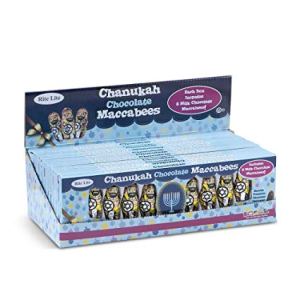
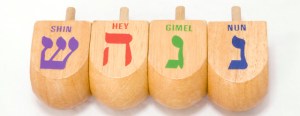
celebrated with a nightly menorah lighting, special prayers, dreidels, chocolate gelt (gold wrapped chocolate coins that are used to barter with during the traditional game of dreidel, and regardless, are delicious chocolates that inherently slow down one’s chocolate consumption due to the need to peel both side of the foil off), and latkes (potato pancakes, plain or topped with applesauce or sour cream) prepared traditionally fried in oil. These are the holiday treats I am accustomed to.
Another traditional food is sufganiyot (pillowy donuts fried in oil, traditionally filled with jelly or jam, but it can be filled with custard, Nutella, pudding, apple butter, or even just plain, with no filling), something that sounds delicious, but I may have had it only once. Perhaps this is the year I will begin to incorporate this in our holiday foods.
The concept of frying foods in oil symbolizes
the miracle of oil that burned for eight days instead of one in the Hanukkah story.
A traditional Hanukkah dinner might be
beef brisket (which is also popular at Passover and Rosh Hashanah). Another option is a delicious dairy oriented meal of Kugel (also known as noodle pudding), a sweet casserole dish that uses an egg noodle base and usually includes cottage cheese, cream cheese, sour cream, eggs, sugar, butter, cinnamon, and optional raisins. For dessert, possibly Rugelach (little rolled cookies using a cream cheese dough which bakes into a light, flaky pastry with an assortment of filling choices, fruit or chocolate, often including chopped walnuts).
The Hebrew meaning of “Hanukkah” is “Dedication” or “Consecration.”
A fascinating fact, Hanukkah is not one of the biblical feasts of Israel.
It is not found in the Hebrew Bible/Old Testament at all, nor in the Aramaic portions in Ezra, Daniel and Jeremiah which is also in that biblical canon. Most of what we know about it comes from two texts, the First and Second Books of Maccabees which are not recognized as canon by Jews or Protestants, however they are in the Greek Orthodox and Roman Catholic bibles.
Hanukah is however referenced in the Greek New Testament.
John 10:22-23 “At that time the Feast of Dedication took place at Jerusalem. It was winter, and Jesus was walking in the temple, in the colonnade of Solomon.”
 In the second century BC, the Holy Land was ruled by the Seleucids (Syrian-Greeks), who tried to force the Israelites to accept Greek culture and beliefs instead of Jewish traditions, culture, and belief in God. Against all odds, a small band of faithful Jews, led by Judah the Maccabee, defeated one of the mightiest armies on earth, drove the Greeks from the land, and reclaimed the Holy Temple in Jerusalem. As they were rededicating the Temple after an un-kosher sacrifice was made, the oil to light the Temple’s menorah (the seven-branched candelabrum), which was only enough for one day lasted for eight. Hanukkah is a powerful story of God interceding on behalf of His people and showing His faithful loving kindness.
Much more than the “Jewish alternative” to Christmas, Hanukkah recalls a dark time in the history of the Jewish people and our miraculous deliverance from that darkness.
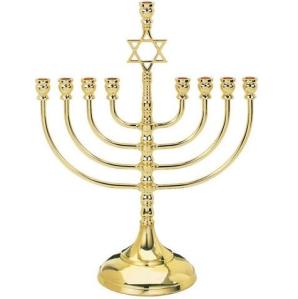
To celebrate, each night at sunset during Hanukkah we light the 8 branched candelabrum called a menorah (or hanukkiah).
There is a 9th candle, on most menorahs in the center, or at one end raised higher than all the others. We first light that candle (which is called the Shamash), and we use that to light the other candles, one additional candle each night, from right to left (electric/LED menorahs placed in windows will look the reverse to the people inside as those are meant to display right to left for the people seeing it from the outside).
Shamash means servant or caretaker.
For people, it refers to the person who takes care of the synagogue. For Hanukkah, it refers to the first candle that is lit on the hanukkiah, the “servant” candle that is used to light all the other candles.
Once the Shamash has brought light to the other candles, it then takes its place, once again, above the others. This is symbolic of the Messiah, who came to be a servant, bringing light into the world, and then took His place, once again above the others. All of Scripture, from the Hebrew Bible/Old Testament, through to the New Testament identifies this Messiah. His name is Jesus.
Each night there is a blessing recited as the candles are lit on the menorah.
Here is information about the blessings/prayers.
For me, every day is about Jesus so of course this holiday is no different.
Tradition wise for me, the celebration of Hanukkah has always been about lighting the menorah, the chocolate gelt, dreidels, sometimes the latkes, and always my family. I have beautiful memories of my father lighting the menorah when I was growing up and singing Maoz Tzur in his off key voice. He has long since passed away, but any singing of this traditional song touches me deeply.
Raising our children, we always gave them turns lighting the “real menorah” (the one with candles as compared to the electric one we placed in the window), and the chocolate gelt was a much enjoyed treat.
When Jesus became real in our lives, the depth of what this holiday symbolizes became the forefront of it all. Never was there adherence to any strict Orthodox religious way of handling every aspect of the holiday. It was simply a beautiful time to celebrate, remember, and rejoice.
As we celebrate the “Festival of Lights” we can rededicate our lives to Jesus and acknowledge Him as the perfect and true light of this world.
Celebrating Hanukkah reminds us of God’s wonderful miracles on our behalf, the greatest miracle of all being His salvation. Hanukkah observance reminds us to remain true to God, despite what popular culture might suggest.
During this great season of remembering miracles, Jesus pointed out to His listeners that the miracles He had done authenticated His claim that He was, indeed, the long-awaited Messiah (John 10:37-38). His works and His true character clearly demonstrated who He was.
Jesus said, “I am the light of the world. Whoever follows me will not walk in darkness, but will have the light of life.” (John 8:12). Jesus gives all of us, Jew and Gentile, black and white, Spanish, Asian, and every single other color and ethnicity on this great universe, the “light of life.” Eternal life. With Him. Here and forever. With what He put in us at salvation “Arise, shine, for your light has come, and the glory of the Lord has shone upon you.” (Isaiah 60:1) .
“In the same way, let your light shine before others, so that they may see your good works and give glory to your Father who is in heaven.” (Matthew 5:16).
With love,
Diane
 The Chaiway